A repricer wins the Buy Box. Dynamic pricing wins the margin.


Most Amazon repricing software reacts to competitors with rules, and usually by going lower. Trellis Dynamic Pricing models demand and profit for every SKU, then moves your price in both directions toward the goal you set.

Built for private-label brands and sellers who own their listings · No race to the bottom

Three ways to price on Amazon

Tracking, repricing, and dynamic pricing are not the same thing.

Each one does more than the last. Most sellers start at the bottom and never realize
there's a rung above the repricer.

01 Price tracker

It watches

You still decide. You still act.

A price tracker tells you when a competitor moves or when your Buy Box slips. Useful for visibility, but every actual price change is still a manual decision you make by hand.

e.g. Keepa, CamelCamelCamel, alerts in Seller Central

02 Repricer

It reacts

Rules you wrote, fired automatically.

A repricer changes price for you based on rules, "match the lowest, beat it by a cent, stay above my floor." Fast at defending the Buy Box. But the logic only knows about competitors' prices, not your demand or your true margin.

e.g. Amazon's native repricer, SellerSnap, RepricerExpress, BQool

You Are Here, Soon

03 Dynamic Pricing

It optimizes

You still decide. You still act.

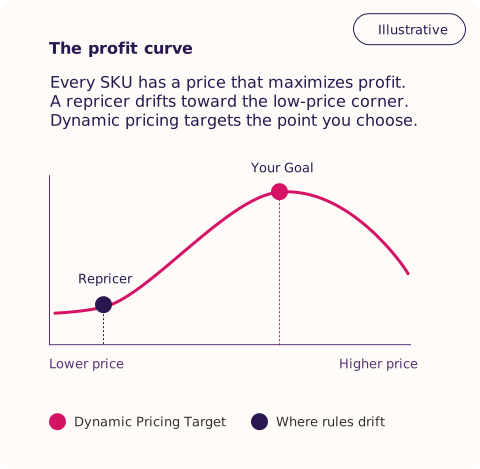
Trellis builds a demand curve and a profit curve for each SKU from your own sales history, then moves price up or down toward the outcome you chose: volume, balance, or margin. It defends the Buy Box like a repricer, but the target is profit, not the floor.

Trellis Dynamic Pricing

Book a Pricing Walkthrough

Where rule-based repricing leaks money

What a repricer can't see.

It only knows "lower"

Amazon's native repricer moves one direction... down. When demand could support a higher price, a one-directional repricer leaves that margin on the table.

It wins at the wrong price

Winning the Buy Box at a price that's unprofitable after FBA fees still loses money. A repricer chasing the Buy Box can't tell the difference.

It ignores inventory

Rule-based pricing doesn't respond to stock position, so aged units sit while you discount, or you sell through your last units at full price into a stockout.

It races competitors down

When every seller runs a "beat the lowest" rule, the only equilibrium is the floor. Repricing logic accelerates the race instead of escaping it.

Rules react · Curves optimize

Your price follows a profit curve, not an if-then rule.

A repricer follows logic you have to write and maintain. Trellis learns how your customers actually respond to price through demand curve mapping price to units sold, and a profit curve mapping price to net margin, built per SKU from your own sales history and recalibrated as new data comes in.

Rule-based Repricer

You define the logic by hand

Reacts to competitor prices only

No model of your demand

Same rule everywhere

Trellis Dynamic Pricing

Per-SKU demand & profit curves

Learns from your own sales history

Targets a profit outcome, not a floor

Recalibrates as the market moves

One control, not a hundred rules

Set the outcome. Let the model find the price.

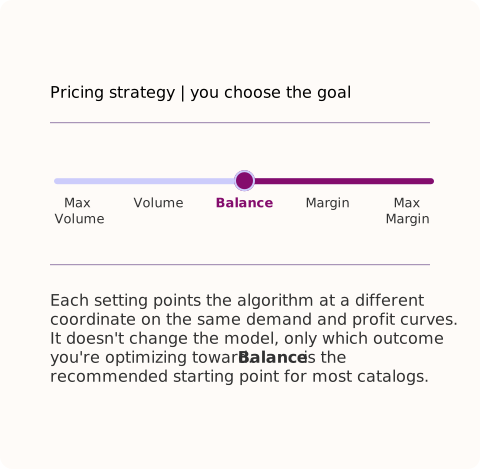
A repricer asks you to encode strategy as rules and floors. Trellis asks one question instead: what are you trying to do with this product right now? Clear a launch, grow share, protect margin? Move the slider and the algorithm targets the matching point on the curve, within your guardrails.

Repricer

"Win the Buy Box", one goal, always

Strategy lives in rule syntax

Same posture for launch and mature SKUs

Trellis Dynamic Pricing

5 goals from Max Volume to Max Margin

Per-SKU or per-category

Hard floors and ceilings always hold

Defend the Buy Box · Keep the margin

Win the Buy Box at the right price, not just the lowest one.

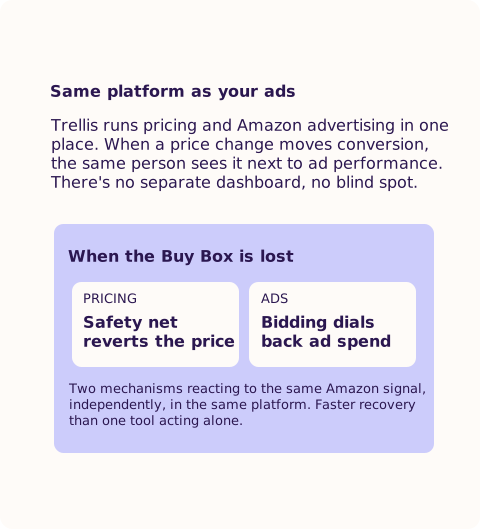
Trellis still does what a good repricer does, it defends the Buy Box. Bi-directional competitive repricing reacts to competitor moves, and a Buy Box safety net automatically reverts the price if a change costs you the Buy Box.

The difference is the objective: it's protecting profit, not chasing the floor. And because you input landed cost, the system optimizes against real net margin after FBA fees. This is the number a competitor-watching repricer never sees.

Rule-based Repricer

Wins on lowest price

Often one-directional (down only)

No view of net margin

No inventory awareness

Trellis Dynamic Pricing

P=Bi-directional, profit-aware

Buy Box safety net auto-reverts

Real margin after FBA fees & COGS

Inventory & Days-of-Supply rules

Capability comparison

Price tracker vs. repricer vs.
dynamic pricing

Price tracker vs. repricer vs. dynamic pricing

A side-by-side look at what each category of Amazon pricing tool actually does.

CapabilityPrice TrackerRule-based RepricerTrellis Dynamic Pricing
PRINCING ENGINE
Changes price automatically
ML demand & profit curve modeling
Bi-directional pricing (up & down)-Some
Goal selection (volume ↔ margin)
Min / max price guardrails-
BUY BOX & MARGIN
Buy Box competitive repricing
Buy Box safety net (auto-revert)Rare
Real net margin after FBA fees / COGS
STRATEGY & CATALOG
Inventory / Days-of-Supply pricing rules
ASIN grouping & price relationships
Walmart price sync & parity capSome
Promotion impact & elasticity reporting
PLATFORM
Amazon advertising in the same platform
Update cadenceAlerts onlyReactiveFast, but deliberate
Find Out If You're A Fit

Who's this right for

Tracking, repricing, and dynamic
pricing are not the same thing.

Tracking, repricing, and dynamic pricing are not the same thing.

Dynamic pricing pays off when you control your price and have room to move it. The brands that
get the most from Trellis usually look like this:

FBA & 3P sellers

You sell on Amazon via FBA or FBM and own the pricing decision on your listings.

Margin to play with

Enough spread between cost and price that moving up or down actually changes the profit math.

Competitive categories

You operate in a crowded market where price moves matter and Buy Box ownership drives the sale.

Private-label & brand owners

You control your own listings and set your own price, the listing isn't shared with resellers.ou sell on Amazon via FBA or FBM and own the pricing decision on your listings.

Established & scaling

Past the experimentation stage, with real sales history for the model to learn from.

Multi-SKU catalogs

Enough SKUs that pricing each one by hand or by static rule has stopped being realistic.

Just reselling on shared listings where raw speed is everything?  A simple competitive repricer is the right call, and we'll tell you so rather than sell you something heavier than you need.

Just reselling on shared listings where raw speed is everything? 
A simple competitive repricer is the right call, and we'll tell you so rather than sell you something heavier than you need.

Book a Pricing Walkthrough

From repricer to dynamic pricing, without
the leap of faith.

From repricer to dynamic pricing, without the leap of faith.

You don't have to switch everything at once. Most brands prove pricing first, then decide.

Connect & ingest

Link your account. Trellis ingests historical price and sales data per SKU to build the first demand and profit curves.

Add COGS, floors & goals

Enter your landed cost (COGS); the single biggest input. It's what turns revenue modeling into true profit-curve modeling and real margin after FBA fees. Then set hard min/max guardrails and pick a goal per SKU or category. Nothing moves outside your bounds.

Price deliberately

The algorithm makes small, measured moves and reads the result before the next one. Signal, not noise. The Buy Box safety net has your back.

See it next to ads

Watch margin and conversion together in one platform. Add advertising when you're ready as pricing can stand on its own first.

Repricer vs. dynamic pricing, answered.

A repricer changes your price based on rules that react to competitors, usually to win the Buy Box, often by lowering price. Dynamic pricing models how your customers respond to price (a demand curve) and what each price does to your margin (a profit curve), then moves price in either direction toward the goal you set. One reacts to the market; the other optimizes against your own economics.

No. A price tracker only watches, it tells you when a competitor's price or your Buy Box status changes. You still make every price decision by hand. A repricer acts on those changes automatically using rules. Dynamic pricing goes a step further and decides the price using a model of demand and profit.

Yes. Trellis does bi-directional competitive repricing and includes a Buy Box safety net that automatically reverts a price change if it costs you the Buy Box. The difference from a standard repricer is the objective, it's defending profitable Buy Box ownership, not winning at the lowest possible price.

As fast as the signal supports, sometimes quickly, but it's deliberate by design. Rather than reacting to every momentary competitor twitch, Trellis reads real demand, conversion, velocity, and margin data so each move is a measured step toward your goal, not a reflex. The result is pricing that responds when it matters without churning your listing. If you're reselling on shared listings where raw speed is the whole game, a minute-by-minute competitive repricer may suit you better.

No. You set hard min and max guardrails per SKU, and the algorithm cannot breach them regardless of strategy or market conditions. Adding your landed cost also lets the system optimize against true net margin after FBA fees, so it understands profit, not just revenue.

No. Dynamic pricing works on its own. Many brands prove pricing first and add advertising later. When both run in Trellis, the advantage is visibility. You can see how a price change affects ad conversion in one platform, with no separate dashboard to reconcile.

See what your prices should be doing.

Tell us about your catalog and we'll show you where dynamic pricing beats a repricer on your own SKUs.