












If you have a formal education in business or marketing, you probably have heard about the 4Ps of Marketing — Product, Price, Placement, & Promotions. Introduced by E. Jerome McCarthy in the 1960s, the model provided a simple yet powerful way to plan campaigns, position products, and connect with customers.
But commerce has changed dramatically since then. Consumers no longer walk into stores as their primary method of shopping—they browse Instagram, click “Buy Now” on TikTok, add items to their Amazon cart during lunch, and expect packages on their doorstep by tomorrow morning. The explosion of eCommerce has transformed the buyer’s journey into a complex, omnichannel, and data-rich ecosystem.
In this new landscape, the 4Ps aren’t outdated; they’ve simply evolved. Each “P” now carries a digital dimension, influenced by personalization, automation, mobile technology, and data analytics. In this article, we’ll explore how each element has changed, why it matters for online sellers, and how you can apply modern strategies to grow your eCommerce business.
What Are the 4Ps of Marketing?
The 4Ps are often called the "Marketing Mix". It's are a set of tools marketers use to convince customers to buy a product or service.
In 1960, E. Jerome McCarthy formally conceptualized the 4Ps of marketing in Basic Marketing, A Managerial Approach. Since then, this simple yet powerful framework is still taught in business schools. Why? Because marketers still need to ask the following questions:
- What is unique about your product or service?
- How much do you charge for your product to maximize sales or profit?
- Where do you advertise your product so your customers can find you?
- How do you promote your product and reach your audience?
From a top-down approach, these four Ps fundamentally question everything a business needs to create a marketing plan. The reason the 4Ps have stood the test of time is because the concept adapts to technology, trends, and is easy to implement. For example:
- Product: Your manufacturer offers recyclable packaging options at extra cost. Would you choose it?
- Price: A competitor launched a cheap electric toothbrush. How do you price your products?
- Placement: A social media channel was launched sharing Amazon products. How do you place your ads?
- Promotion: Walmart launches flash-sale coupons. How do you incorporate it into your strategy?
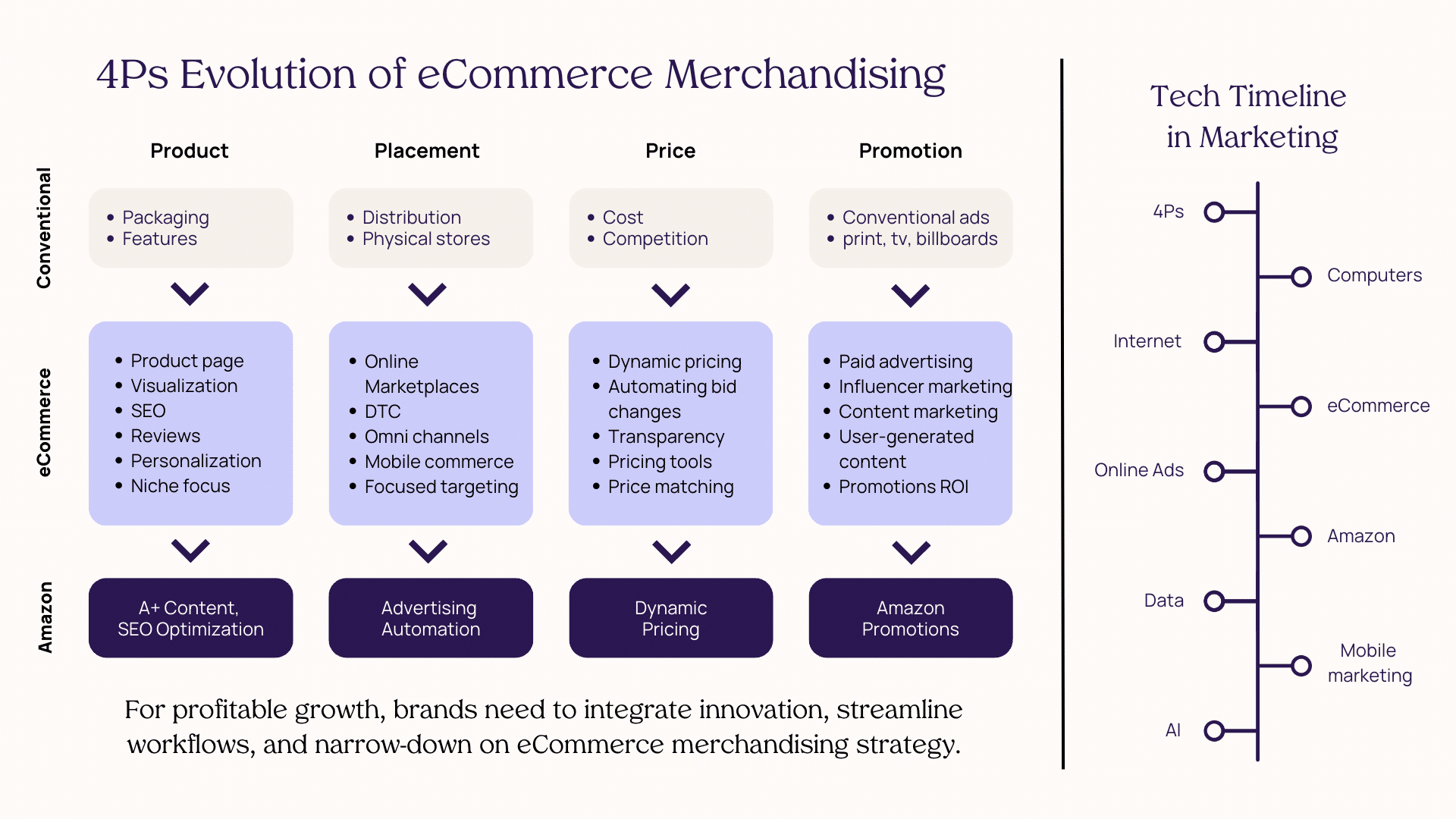
The 4Ps in eCommerce have evolved.
- Product now means dynamic content updates, optimized listings, and real-time improvements.
- Price relies on algorithmic repricing instead of manual adjustments.
- Place is multi-channel presence across Amazon, Walmart, Shopify, and more.
- Promotion is driven by automated deals and scheduled campaigns.
The Evolution & Role of Tech in Marketing
Since the 1960s, business technology has come a long way. Every advancement has brought new opportunities for marketers, but also made it more challenging.
- Computers: Since the 1970s, computers have allowed marketers to work with spreadsheets and run in-depth data analysis more efficiently.
- Internet: The internet emerged in the 90s and completely changed how businesses communicated and advertised.
- Search Engines: Shoppers started to find products through search queries, which gave marketers an additional advertising channel.
- Social Media: Social media adoption in the 21st century has allowed brands to tell their stories and engage directly with shoppers.
- Consumer Data: eCommerce growth gave more data to brands, which they use to gain consumer insights to target efficiently.
- Mobile Marketing: Smartphone adoption boosted eCommerce as more shoppers shopped online and from the comfort of their mobile devices from anywhere in the world.
- AI & Automation: Artificial intelligence enables sellers to analyze complex data more efficiently, more quickly ramp up campaigns, and so much more.
The above-mentioned innovations all make up our current marketing ecosystem, giving marketers more challenges but also more opportunities. For instance, we can create an eCommerce store in less than 30 minutes, advertise products anywhere in the world within a few hours, and target a specific audience based on our ideal customer profile. Opportunities are augmented by access to thousands of data points within seconds.
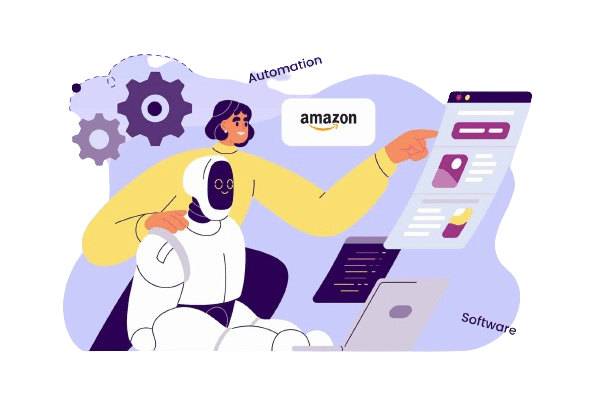
Sellers who automated all 4Ps reduced operational time by 28% and grew revenue by 18% compared to those managing their merchandising manually.
eCommerce's Effect on the 4Ps of Marketing
With several opportunities at their disposal, brands need a framework to analyze where they lost focus. The 4Ps can help brands understand their marketing strategy better as it is adaptable and easy to implement.
To bring the focus back, we need to understand how technology impacts the marketing mix. Expanding on them can bring us back to what is the most important part of each P.
Product
In the traditional marketing mix, the product was the tangible or intangible item you offered. Marketers focused on features, benefits, and competitive differentiation. In eCommerce, however, the product extends far beyond its physical form. Today, the product is also the experience surrounding it, from the way customers discover it online to how they unbox it at home.
Content: Today, brands have more content space. Product pages have more words to sell, images from various angles, videos, and social proof. They can also provide a 360 view of the product. With more space to provide content, the bar has risen. Customers expect more information to decide about a product which pushes marketers to be more creative and stand out.
Reviews: Shoppers always need social proof. Before, word-of-mouth endorsements from a neighbor or family member worked. Now, shoppers rely on internet ratings and reviews. More positive reviews increase your selling chances. Historically, you wouldn’t have other shoppers roaming around the product providing unsolicited feedback in the shopping aisles. Customers now lean on reviews on Amazon, Walmart, or Google which shows merchandising is more meritocratic.
SEO: Getting search traffic is the cheapest way of getting traffic to your products. Showing up in a search query on Google and marketplaces like Amazon and Walmart means valuable low-cost sales. Having an SEO-driven product listing increases your visibility but it is highly competitive to rank on the first page. SEO has provided a way for smaller brands to enter the market as they find holes in what consumers want and need.
Personalization: According to industry research, 71% of consumers now expect personalized interactions from brands, and companies that deliver tailored recommendations see improved conversion rates. Personalized experiences don’t just increase sales, they also strengthen loyalty, with repeat customers spending significantly more than first-time buyers.
The Product Evolution
To adapt your own eCommerce product strategy, start by collecting first-party data through sign-ups, surveys, and on-site behavior tracking. This data can fuel recommendation engines, enabling you to suggest relevant products in real-time. Offering customization options, such as monogramming, color selection, or bundled sets, can also make your product feel uniquely tailored. Finally, focus on every interaction as part of the product: website navigation, checkout flow, packaging design, and post-purchase follow-up all contribute to the perceived value.
Placement
In the original model, “place” referred to the physical location where customers could buy your product—stores, showrooms, or distribution points. Success often depended on securing prime retail space or establishing strong distribution networks. Today, place is less about geography and more about accessibility.
The eCommerce era demands an omnichannel presence. Your product needs to be available wherever your customers are, whether that’s on your own DTC website, a marketplace like Amazon, or within a social media feed. Research shows that during the 2024 holiday season, 79% of online orders came from mobile devices, underscoring the importance of mobile-first design and shopping experiences. At the same time, AI-powered chatbots and virtual assistants helped drive a record $282 billion in U.S. eCommerce sales, reflecting the growing role of digital customer support in converting browsers into buyers.
Online Marketplaces: Now anyone can compete on the biggest online marketplaces like Amazon and Walmart. Brands can get their products in front of millions of customers with small investment and grow faster than ever.
Direct-to-Consumer (DTC): DTC was a luxury reserved for established brands with physical stores. As eCommerce website development has become quick, easy, and inexpensive, any seller can create their online store and become an online seller. In combination with today’s marketing channels and streamlined operations through software and strategic partners, small stores are able to compete with established names.
Mobile Commerce: Mobile-responsive websites are easier to use for shoppers providing a better experience. Projections say that mobile shopping could account for nearly 63% of all online purchases by 2028. Those prepared to take on this trend will increase their presence and take market share away from their competitors.
Focused-Targeting: Placement is also about reaching the right audience at the right time. When advertisers largely used billboards, events, and TV commercials to reach audiences, they could only target a broad audience which was expensive. Today marketers don't need to target everyone. Digital advertising can be exponentially more efficient, and be delivered in more places.
The Placement Evolution
To modernize your own place strategy, start by identifying where your audience spends their time. Invest in selling through those channels, whether it’s TikTok Shop, Walmart, or your own Shopify store. Optimize your site for mobile users, streamline your checkout process, and integrate your inventory systems so that all channels display accurate, synchronized data. Speed is also critical, so partner with reliable fulfillment services that can meet or exceed customer delivery expectations.
Pricing
Pricing has become more competitive than ever before due to more sellers joining eCommerce. With minimal start-up costs and low barriers to entry, technology provides everyone with the right merchandising tools. To stay on top, brands need better pricing tools to stay profitable and competitive.
Traditionally, price was determined by production costs, competitor benchmarks, and desired profit margins. Price changes were occasional and often tied to seasonal sales or new product launches. In the world of eCommerce, pricing has become far more dynamic.
Dynamic pricing, powered by AI, allows online sellers to adjust prices in real-time based on demand, inventory levels, competitor activity, and even a shopper’s browsing behavior. This strategy is common among major players like Amazon, which reportedly changes millions of product prices each day to remain competitive and maximize margins.
Today, pricing is more about taking data-driven decisions and adapting quickly, rather than pricing strategies in the marketing books.
Dynamic Pricing: Brands today use algorithms to find optimal pricing for their products. Based on various factors such as supply and demand, competitor pricing, and customer behavior, brands make data-driven pricing decisions. Algorithms learn what price changes will maximize profit or sales velocity.
Automation: Price changes in conventional methods were slow. Today, merchandising experts use pricing tools that automate price changes. Price changes can be automated for hundreds of products, which is impossible to do manually. Automation can save you time and money, and give you better results through real-time pricing changes.
Transparency: The internet has made it easier for customers to compare prices online. Price is a huge factor in purchasing decisions. A brand must offer the best price to avoid losing a sale. Today, even brick-and-mortar stores have price-matching policies.
The Evolution of Price
To implement dynamic pricing in your business, invest in a pricing intelligence platform that can monitor competitor rates and automatically adjust yours according to predefined rules. Pair this with transparent value communication: highlight exclusive benefits, superior quality, or added services that justify your price. And don’t forget the psychology of pricing; small adjustments like $9.99 instead of $10 can subtly influence perception.
Promotion
Promotion once meant placing ads in newspapers, buying radio spots, or setting up in-store displays. While traditional advertising still has its place, the eCommerce world is dominated by content and data.
Modern promotion strategies revolve around creating valuable, engaging content that attracts and retains customers. This includes blog posts, videos, tutorials, and social media stories that inform and entertain rather than simply sell. Data plays a central role, enabling brands to deliver hyper-targeted campaigns based on browsing history, purchase patterns, and engagement behavior.
Paid Advertising: Paid advertising has become a crucial element of product promotion. Brands can use digital ads to target specific audiences. While paid advertising is becoming highly competitive, brands need automation in their workflows. If a brand doesn’t leverage AI for data analysis, competitors will.
Influencer Marketing: Celebrity endorsements have become influencer marketing, but that doesn't mean you need a big name to promote your product. Social media has opened personal media channels for everyone, so anyone can create a following. Brands can work with platforms like Levanta to connect with creators, or tap into emails in bios or DMs.
Content Marketing: Content is still king for many brands. Inbound content marketing helps brands write problem-solving articles seeking the right audience. Despite the tricky ROI of content marketing, brands invest in content to acquire traffic and improve conversion rates over the long term.
User-generated Content (UGC): Customers now promote your product. If a customer had a poor experience with your product, they can share it online. You can find product reviews not only on product listings but also on social media and forums like Reddit. If you decide to utilize UGC, ensure you get permission from the customer before posting.
The Evolution of Promotion
Start by mapping the customer journey and identifying where content can remove friction or add value. Use segmentation to tailor messages for different audience groups, and invest in retargeting ads to re-engage visitors who didn’t convert the first time. Leverage AI-powered tools to test and refine messaging, ensuring that each campaign resonates with the intended audience.
Beyond the 4Ps: People, Purpose, Platform
While the 4Ps remain central, eCommerce has introduced new factors that deserve attention. People, your customers, employees, and brand advocates, are critical to your reputation and growth. Providing exceptional customer service and fostering community can turn buyers into loyal fans.
Purpose has also emerged as a key differentiator. Consumers increasingly choose brands that align with their values, whether that’s sustainability, ethical sourcing, or social impact. Communicating your brand’s purpose can deepen emotional connections and justify premium pricing.
Finally, your platform, the technology stack powering your business, can make or break your success. From your eCommerce platform to your CRM and analytics tools, choosing systems that integrate seamlessly will enable smoother operations and better customer experiences.
 Bringing It All Together
 Bringing It All Together
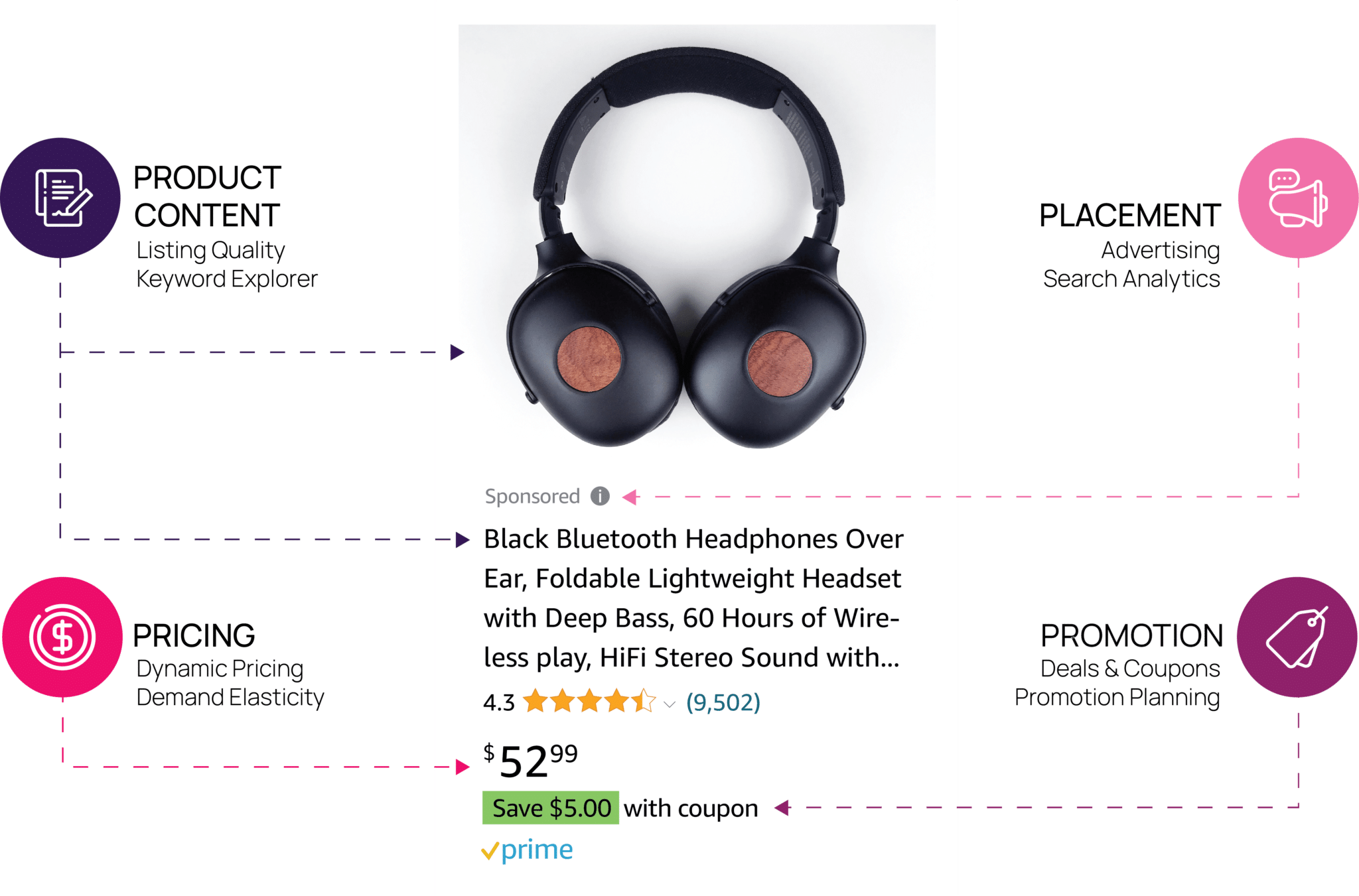
Adapting the 4Ps for eCommerce is about more than checking boxes; it’s about weaving each element into a cohesive, customer-first strategy. Your product should feel personal, your pricing should be smart and fair, your place should meet customers wherever they are, and your promotion should be relevant, engaging, and data-informed.
By embracing personalization, dynamic pricing, omnichannel availability, and content-rich promotion, you position your business to thrive in a competitive digital marketplace. By layering in the new “P”s—People, Purpose, and Platform—you create a brand that’s not only profitable but also meaningful.
Want to work with a company that embodies the evolution of the 4Ps of marketing? Book a demo today!