



The Builder: Your Judgment, Made Repeatable
Describe the check you run by hand and the Builder turns it into a Skill in one sitting: fixed steps that return the same result every run, with every step and the rows behind it in view. Q asks the questions, you set the standard, and the Skill runs it every week after.
Try Qore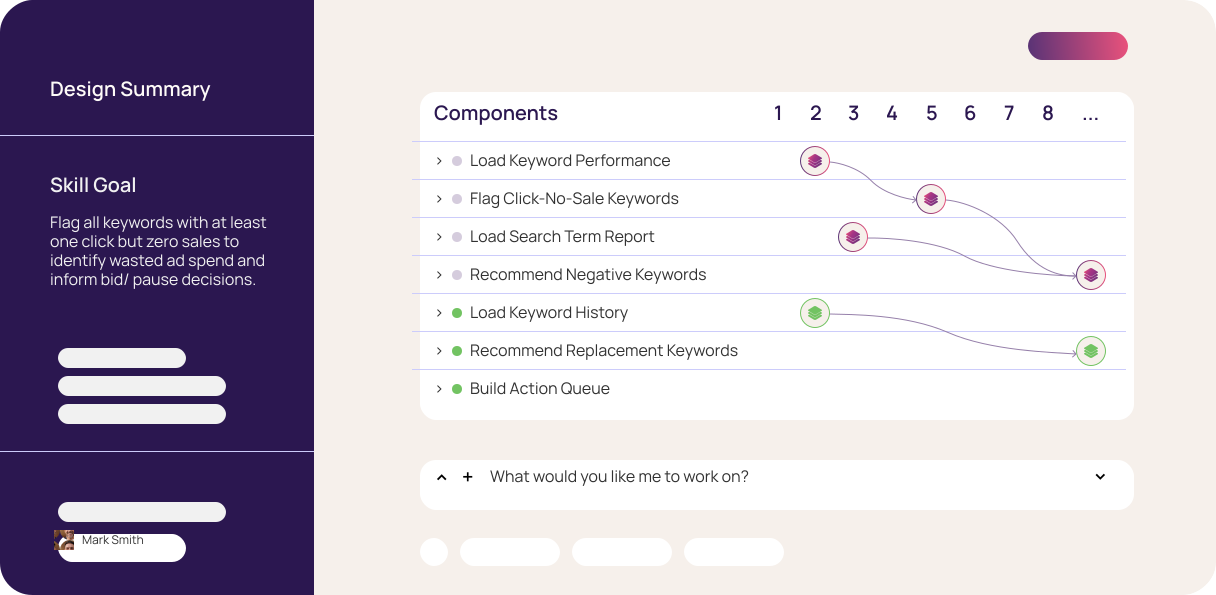
not their hours.
- Re-derives the logic on each run, so results drift
- Runs only when you remember to run it
- Keeps no record of what it changed or when
- Asking it to remember a rule is asking a person to
- Hand it to a teammate and the standard changes
- Fixed steps, so the same inputs return the same result
- Runs hourly, daily, or weekly without you
- Logs every action, so you can optimize into the future
- Ignore or suppress an action by rule, for as long as you say
- The same standard on account one and account forty
How it Works

Strategize
Define the problem and how you usually approach it. Together, we build the workflow in one sitting. Q asks what a good analyst would ask, and the Skill takes shape as a step chain you can read, in plain terms, from the first minute.

Operationalize
We transparently build the process step by step. See each integration, report, and metric and leverage it against the right rules and settings. We check each step against live data before moving on, and fix issues in front of you so you can audit the outcomes.

Run
From then on the Skill runs itself on the schedule you set, on every account you point it at. Every action is logged, every change waits for your approval, and the result is the same one you would have reached. Once comfortable with the output, run on repeat.
Encode
The standard that lives in your head becomes written steps in one sitting. Q asks what a good analyst would ask, and the Skill takes shape as a step chain you can read, in plain terms, from the first minute.
Verify
The things you would otherwise catch by hand: a step that returns nothing, a filter that drops the wrong rows, a brand name that never got set. Each step is checked against live data before the next, and fixed in front of you.
Run
From then on the Skill runs itself on the schedule you set, on every account you point it at. Every action is logged, every change waits for your approval, and the result is the same one you would have reached, without the afternoon.


not do is decide what good looks like for you. That part stays yours, on purpose.
& Tasks
500+
brands in
open beta
brands in open beta
$900M
in GMV
under execution
in GMV under execution
100B+
tokens
processed
tokens processed
80%
of the weekly workload
Qore takes on
of the weekly workload Qore takes on
Frequently Asked Questions
Four ways: a plain-language prompt with no starting point, a doc that spells out your logic, a screenshot of a dashboard you already use, or logic copied from Claude.
Yes. Every step is visible and editable, and you can save versions. Change one rule and the rest of the Skill keeps running as before.
No. You describe the check in plain language and the guided builder assembles the steps, validating each one with you. The classic builder is there if you want more control.
Most take a single sitting. An involved one runs longer because the builder validates each step as it goes, which is the part that makes it trustworthy.
Yes. You describe the workflow in plain language and the Builder turns it into a Skill that runs on a schedule. No SQL, no scripting, and every step stays visible so you can check the logic.
A prompt is re-interpreted each time, so two runs give two slightly different answers. A Skill is fixed, encoded steps: the same inputs return the same result every run, and it can run on a schedule and act on approval.
Build your first Skill.
Watch it run before you commit.